Blue Patch Initiative
Bringing a buried pond back to life in Sector 68, Gurugram.
Conceived, planned, and led by Devvrat Yadav, a student at Shikshantar School, Gurugram, in collaboration with RSP Developers' CSR initiative. A mission to restore a dying urban water body and give it back to the community.
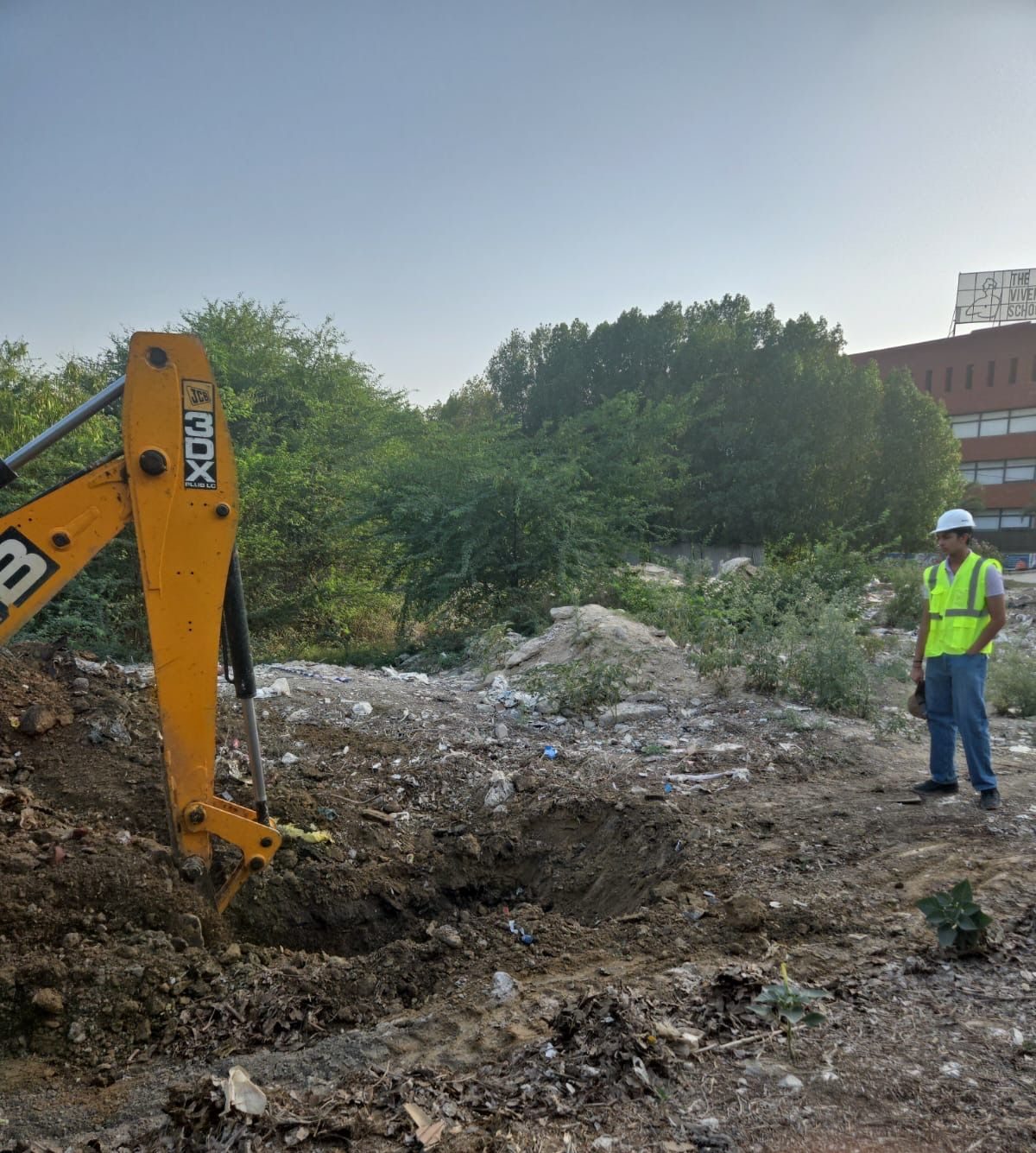
Gurugram is losing its water bodies
When the Gurugram Metropolitan Development Authority surveyed the district for the National Green Tribunal, it inventoried 644 water bodies covering about 1,142 acres. Of these, 153 had "practically vanished beyond recovery or revival", and another 53 were facing "existential pressures" from landfill, the dumping of garbage and construction waste, levelling and encroachment (GMDA, 2019).
More on the causes and the region's groundwater
Researchers trace this loss to the way the city was built. Gururani (2021) describes how water bodies such as Ghata jheel were turned into land for building as Gurugram urbanised, and Dev (2017) shows how paved ground stops rain from soaking in, leaving the city prone to flooding while its groundwater falls.
Groundwater across the region is falling as well. Satellite measurements show that between August 2002 and October 2008 the groundwater beneath Rajasthan, Punjab and Haryana, including Delhi, dropped by an average of about 4 cm of water a year, a loss of roughly 109 cubic kilometres (Rodell et al., 2009).
Badshahpur Pond had gone the same way: filled with waste, levelled and forgotten. The Blue Patch Initiative exists to bring it back.
Figures from the GMDA report to the National Green Tribunal (GMDA, 2019). Nationally, Mission Amrit Sarovar set out in April 2022 to develop and rejuvenate 75 water bodies in every district (Ministry of Jal Shakti, 2022).
The Goal
Badshahpur Pond has been buried under years of solid waste, construction debris, and encroachment. Our mission is to fully restore it, removing all garbage, desilting the bed, and reviving it as a functioning freshwater body that recharges groundwater and supports local biodiversity.
This project was conceived and strategically led by Devvrat Yadav, a student at Shikshantar School, who identified the pond, secured municipal permissions, coordinated with RSP Developers' CSR initiative, and continues to drive every phase of execution on the ground.
Swipe sideways for all four.
Why Urban Ponds Matter
In rapidly urbanising cities like Gurugram, water bodies are not luxuries, they are critical infrastructure. A single healthy pond provides several ecological and social benefits at once.
Swipe sideways for all six.
Project Progress
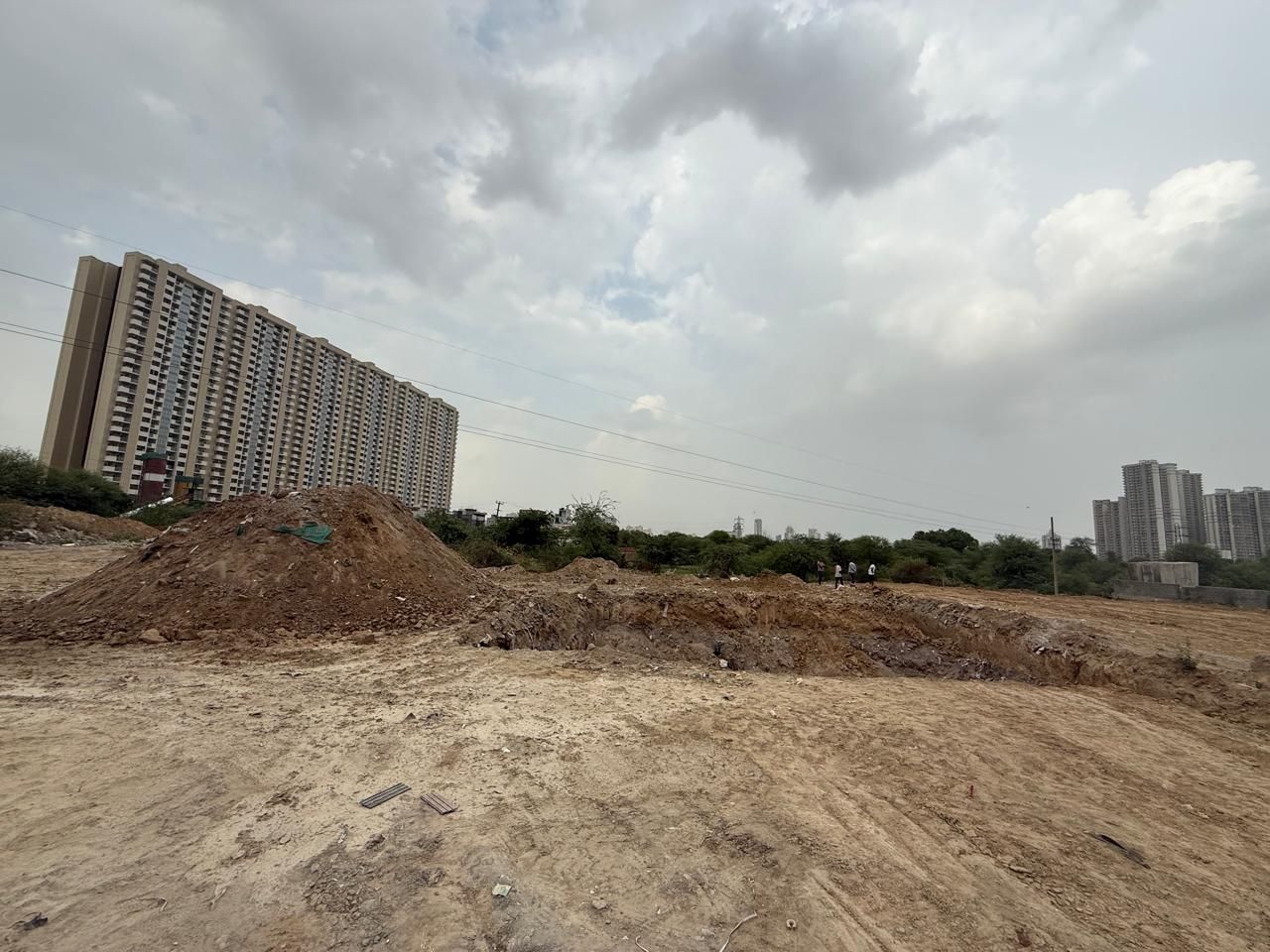
The main excavation of the pond bed is done. The banks still have to be shaped to the planned layout before planting begins.
-
CompleteSurvey and permissionJanuary 2026
-
Under wayGround preparation and excavationFrom May 2026
-
UpcomingEcosystem plantingOnce the banks are shaped
-
UpcomingWater collection and community handoverTo follow
No witchcraft, no enemy action had silenced the rebirth of new life in this stricken world. The people had done it themselves.
Rachel Carson, "A Fable for Tomorrow", Silent Spring (1962)
Environmental action does not wait for institutions. It begins with one person deciding to act.
Devvrat Yadav, Blue Patch Initiative
The research, the person and the people on site
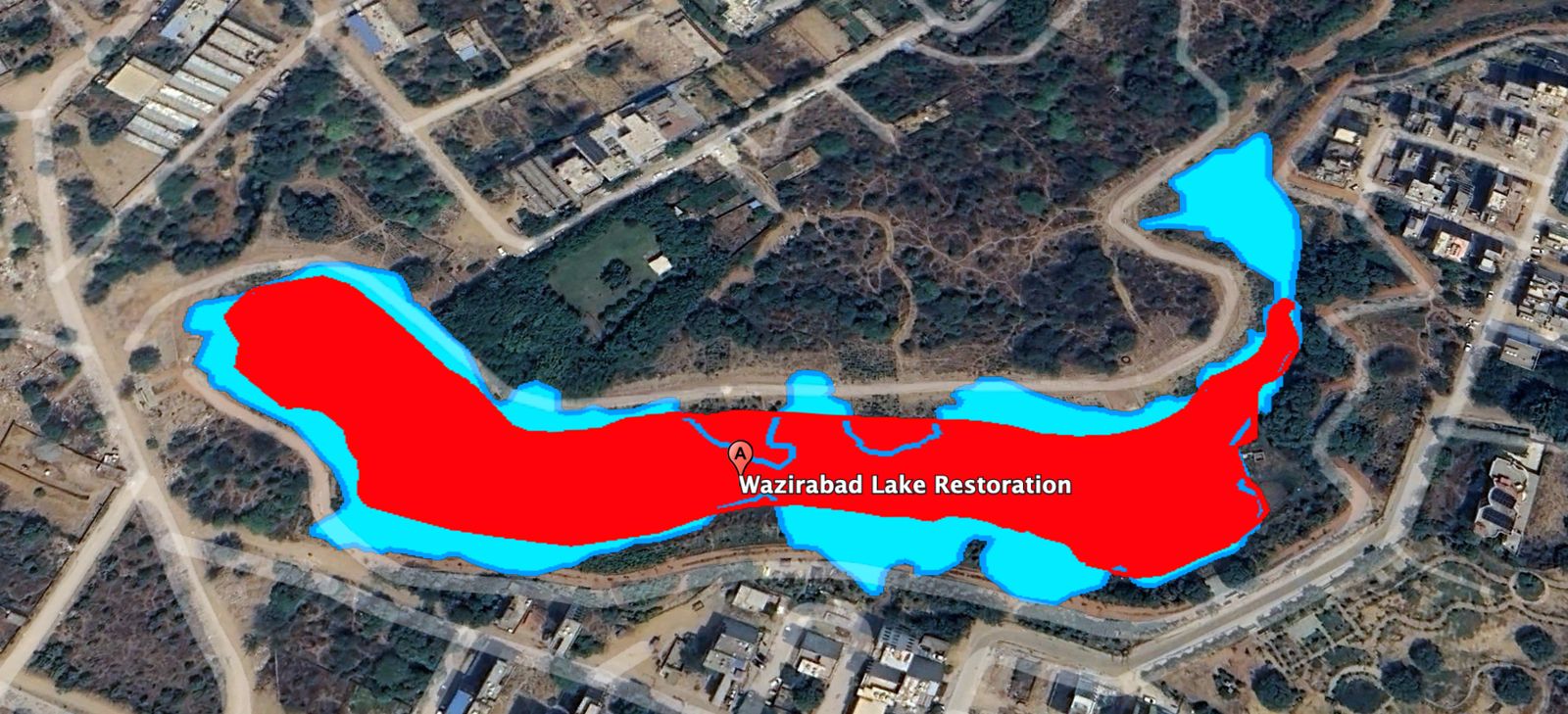
The Blue Patch Initiative grew out of a research paper on why Gurugram's lakes are declining and how they can be restored, with every source listed.
Read the research
A student at Shikshantar School, Gurugram, who identified the pond, secured municipal permissions and leads the work on the ground.
About Devvrat
An interview with environmentalist Mr Chetan Agarwal, and site interviews and project updates on Instagram and YouTube.
Watch and followHelp bring the pond back.
Whether you're a resident, volunteer, or organisation interested in supporting this initiative, we'd love to hear from you.
References on this page13 sources
- Addo-Bankas, O., Zhao, Y., Gomes, A., & Stefanakis, A. (2022). Challenges of urban artificial landscape water bodies: Treatment techniques and restoration strategies towards ecosystem services enhancement. Processes, 10(12), 2486. https://doi.org/10.3390/pr10122486
- Balasubramanian, I. (2023). Strategies to mitigate urban flooding and build climate resilience: Lessons for Indian cities. International Society of City and Regional Planners. https://isocarp.org/app/uploads/2023/08/Indumathi-Balasubramanian.pdf
- Dev, A. (2017). Urban cannibalism: A self-destructive decay – the duality of ecological dismay; Gurgaon. International Journal on Emerging Technologies, 8(1), 297–303.
- Fletcher, J., Willby, N. J., Oliver, D. M., & Quilliam, R. S. (2024). Multi-pollutant removal dynamics by aquatic plants in monoculture or mixed communities. Environmental Research, 263, 120041. https://doi.org/10.1016/j.envres.2024.120041
- Gurugram Metropolitan Development Authority. (2019, May 2). Water bodies in district Gurugram [Compliance report in O.A. No. 325 of 2015, Lt. Col. Sarvadaman Singh Oberoi v. Union of India & Ors.]. National Green Tribunal. https://www.greentribunal.gov.in/sites/default/files/all_documents/GMDA-Compliance%20Report%20In%20O.A.%20No.%20325%20of%202015.pdf
- Gururani, S. (2021). Making land out of water: Ecologies of urbanism, property, and loss. In A. Rademacher & K. Sivaramakrishnan (Eds.), Death and life of nature in Asian cities (pp. 138–158). Hong Kong University Press.
- Hill, M. J., Greaves, H. M., Sayer, C., Hassall, C., Milin, M., Milner, V. S., Marazzi, L., Hall, R., Harper, L. R., Thornhill, I., Walton, R., Biggs, J., Ewald, N., Law, A., Willby, N., White, J. C., Briers, R. A., Mathers, K. L., Jeffries, M. J., & Wood, P. J. (2021). Pond ecology and conservation: Research priorities and knowledge gaps. Ecosphere, 12(12), e03853. https://doi.org/10.1002/ecs2.3853
- Jandaghian, Z., & Colombo, A. (2024). The role of water bodies in climate regulation: Insights from recent studies on urban heat island mitigation. Buildings, 14(9), 2945. https://doi.org/10.3390/buildings14092945
- Ministry of Jal Shakti. (2022, July 21). Restoration of water bodies [Press release]. Press Information Bureau, Government of India. https://www.pib.gov.in/PressReleaseIframePage.aspx?PRID=1843391
- Raj, A., Yadav, B., Patidar, N., Krishan, G., Deka, B. J., Jeong, S., Pandey, A., Matsuno, Y., & Singh, R. D. (2024). Artificial recharge initiatives in India: Challenges and future scope. APN Science Bulletin, 14(1), 93–109. https://doi.org/10.30852/sb.2024.2568
- Rodell, M., Velicogna, I., & Famiglietti, J. S. (2009). Satellite-based estimates of groundwater depletion in India. Nature, 460(7258), 999–1002. https://doi.org/10.1038/nature08238
- Shuster, W. D., Bonta, J., Thurston, H., Warnemuende, E., & Smith, D. R. (2005). Impacts of impervious surface on watershed hydrology: A review. Urban Water Journal, 2(4), 263–275. https://doi.org/10.1080/15730620500386529
- Wan, C., Shen, G. Q., & Choi, S. (2021). Underlying relationships between public urban green spaces and social cohesion: A systematic literature review. City, Culture and Society, 24, 100383. https://doi.org/10.1016/j.ccs.2021.100383
Every source used on this website is listed on the References page.